
Foldable Smartphones and AI Features Dominate Consumer Gadget Trends in 2026
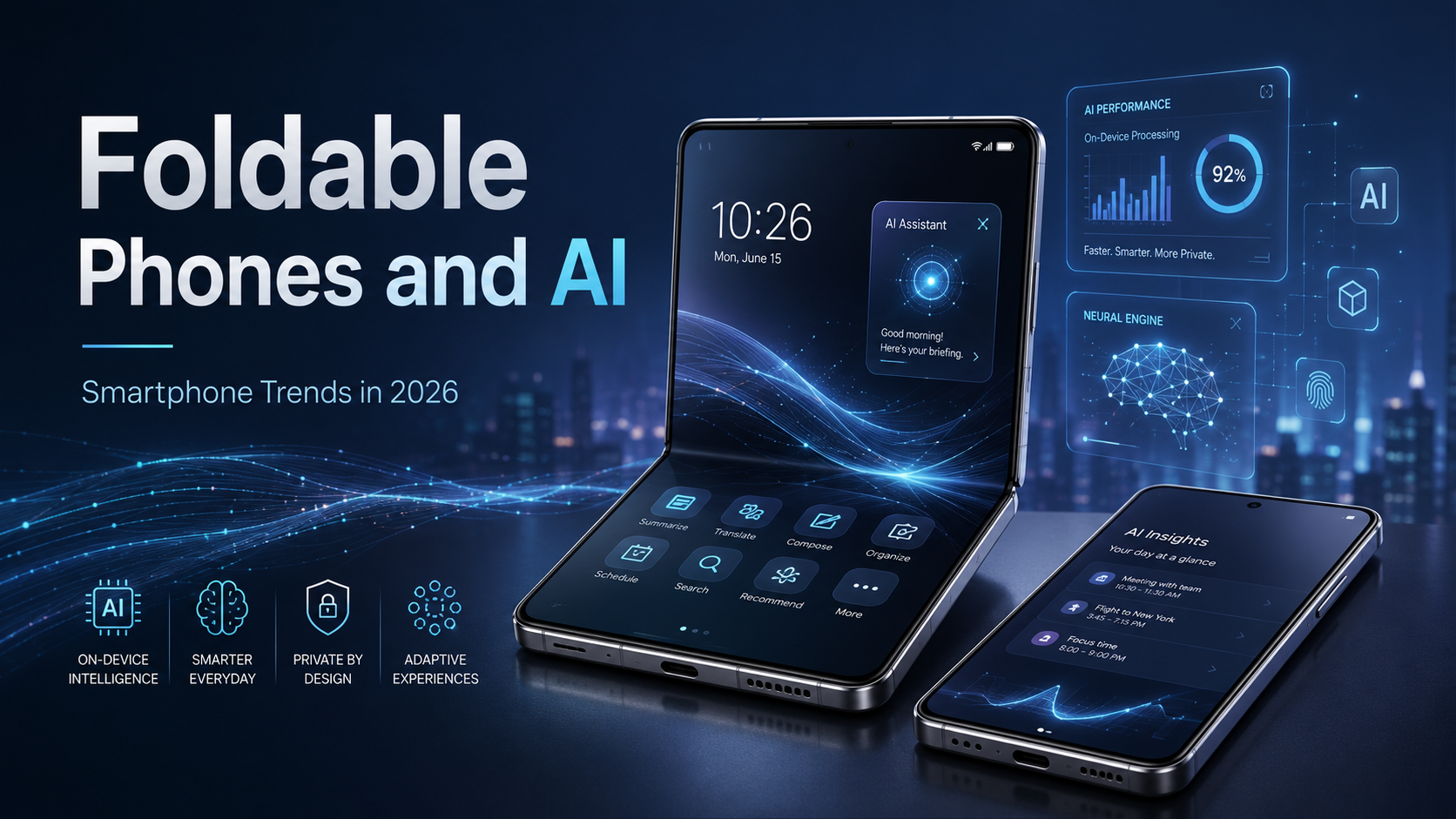
Phone makers have quietly stopped competing on spec sheets. Walk through any 2026 flagship launch and you'll notice the pitch has changed — it's less "faster chip, bigger screen" and more "here's what your phone can now figure out on its own." Two shifts are driving that: foldables have finally grown up, and AI has moved from the cloud onto the device itself.
The foldable complaints from a few years back — flimsy hinges, weak battery life, screens that felt fragile the moment you unboxed them — are mostly gone. This generation is thinner, the hinges hold up to real daily folding, and the displays are bright enough to use outdoors without squinting. Prices are still working their way down, but the gap to a standard flagship is closing fast enough that foldables are starting to look like a real option rather than an enthusiast purchase.
AI is the bigger shift, though, and it's happening under the hood. A lot of what used to require a round-trip to the cloud — photo edits, live translation, summarizing a long article, talking to a voice assistant that actually understands context — now runs directly on the phone. That's not just a speed win. Keeping the processing local means less of your data ever leaves the device, and the phone doesn't need a signal to do any of it.
Battery life is benefiting from the same efficiency push. Chipmakers have gotten better at squeezing more performance per watt, so manufacturers can pair that with bigger batteries without the phone turning into a brick. Charging speeds keep creeping up too — full charges in the time it used to take to get to fifty percent.
Cameras are the clearest example of AI replacing brute-force specs. Instead of chasing megapixel counts, companies are leaning on AI to fix the harder problems: photos that hold up in low light, video that doesn't shake, scenes that get recognized and optimized automatically before you even tap the shutter. The result matters more than the number on the spec sheet.
Buyers are noticing, too — and increasingly factoring in things that have nothing to do with the hardware itself. How many years of software updates a phone will actually get. How seriously the manufacturer treats security patches. Whether the AI features feel like genuine productivity tools or a marketing checkbox.
Expect the pressure to keep building through the rest of 2026. More manufacturers are entering the foldable race, and the AI feature set is expanding fast enough that this year is shaping up to be one of the more consequential ones for mobile phones in recent memory — not because of a single spec, but because the definition of "flagship" is visibly shifting under everyone's feet.